Diagnosis first
We distinguish progressive pattern loss from shedding, inflammatory disease and other causes before considering surgery.
 Derma 360Madhapur · Love yourself91000 68187
02 · Private consultation
Share a few details with our hair restoration team. We’ll review your request and contact you to arrange a doctor-led assessment at Derma 360 Madhapur.
Complete the form and continue securely in WhatsApp.
Your details are not stored on this website. WhatsApp will open with your information ready to send to the clinic.
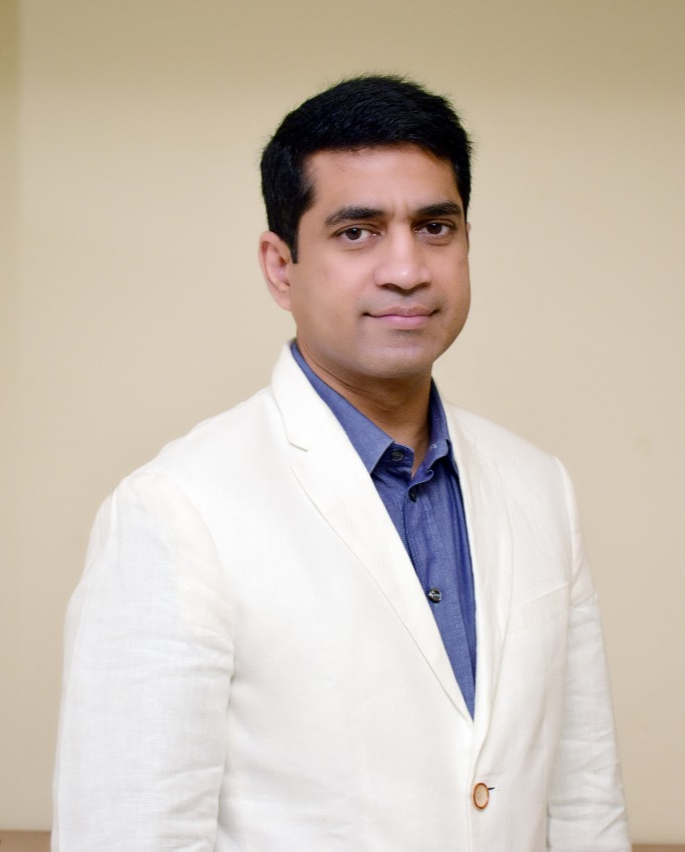
Derma 360 · Madhapur
01 · Surgeon profile
MD, DM · Dermatologist · Chief Hair Transplant Surgeon
With experience spanning more than 10,000 hair transplant procedures during his career, Dr. Krishnanand Boosa is regarded as one of Hyderabad’s leading hair transplant surgeons.
His approach begins with an accurate diagnosis, careful donor-area assessment and a hairline designed around the patient’s facial proportions, age and future pattern of hair loss. Every plan is developed to balance visible density with responsible donor preservation and a natural-looking result.
03 · Real patient results
Browse real Derma 360 hair transformation cases. Swipe with your finger, drag with your mouse, or use the arrow controls.
Every result is individual and may vary.01 / 07
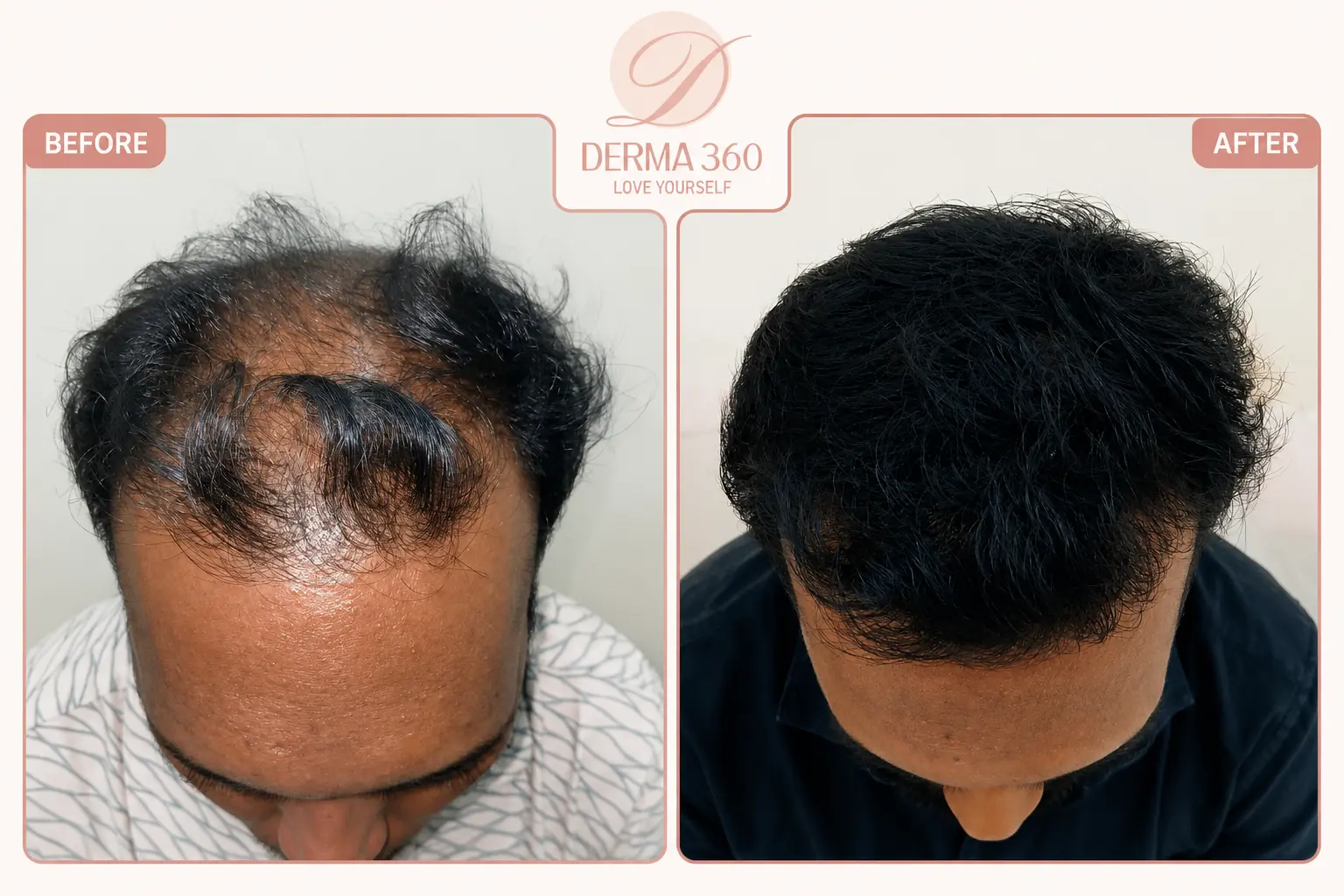
Before & after · Individual results vary
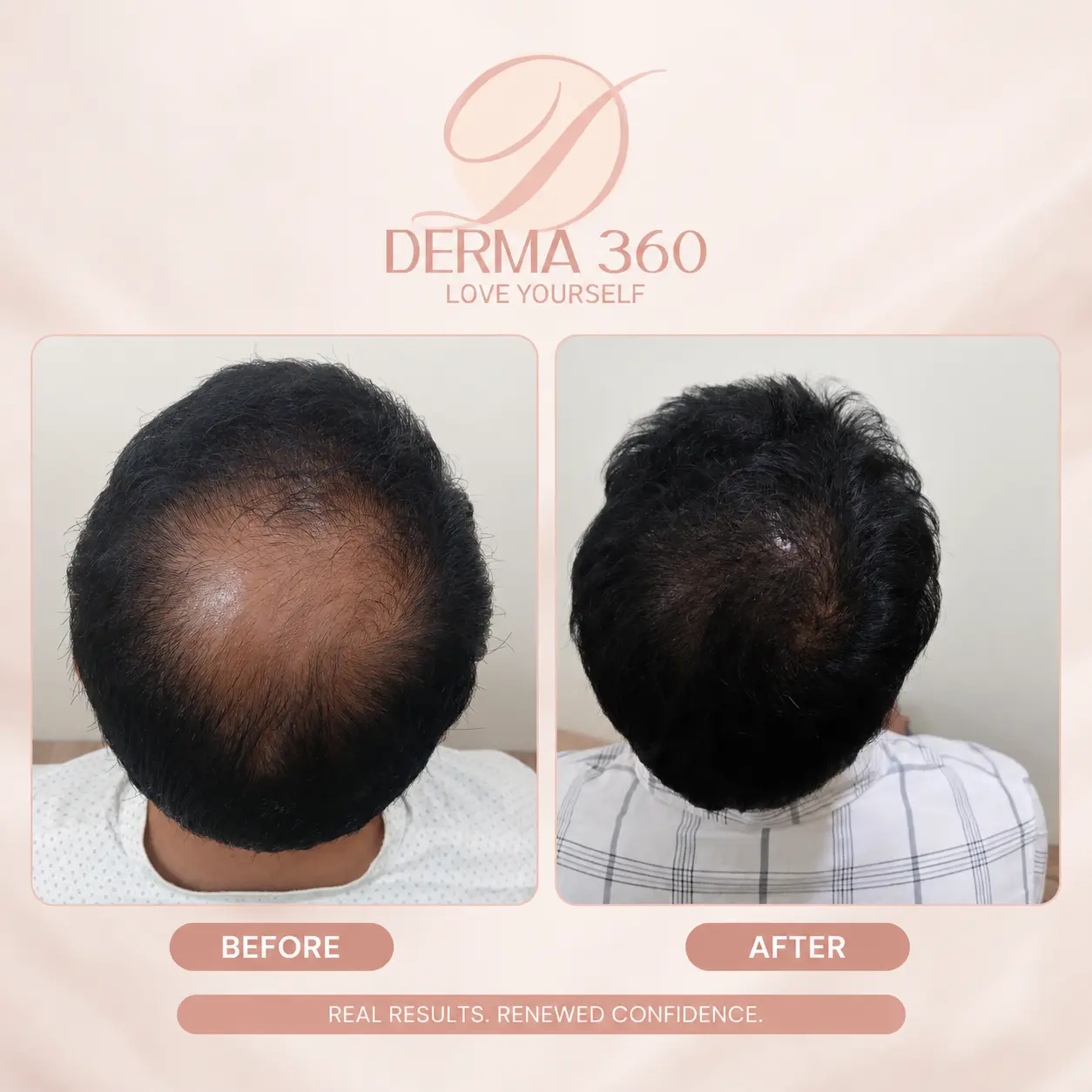
Before & after · Individual results vary
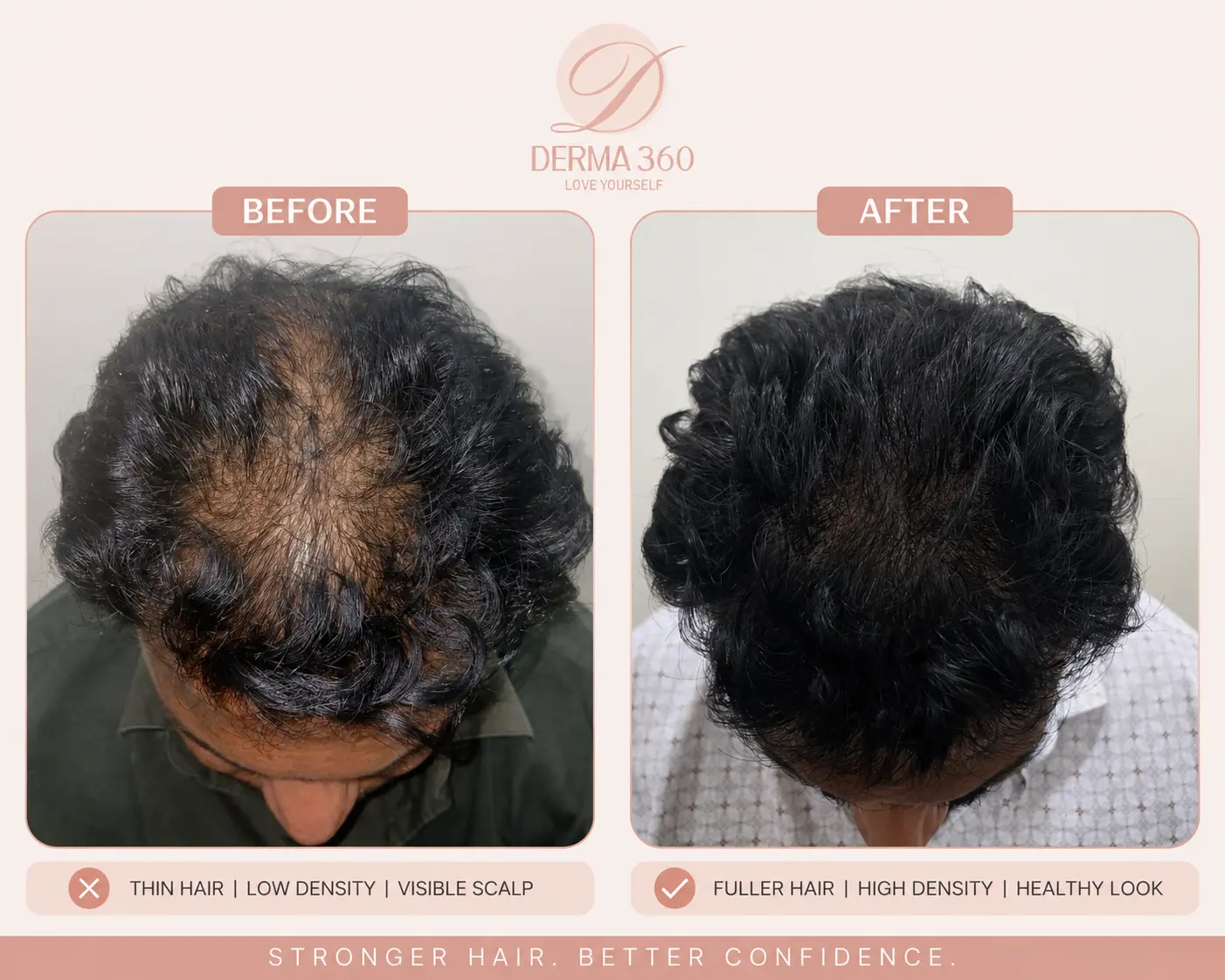
Before & after · Individual results vary
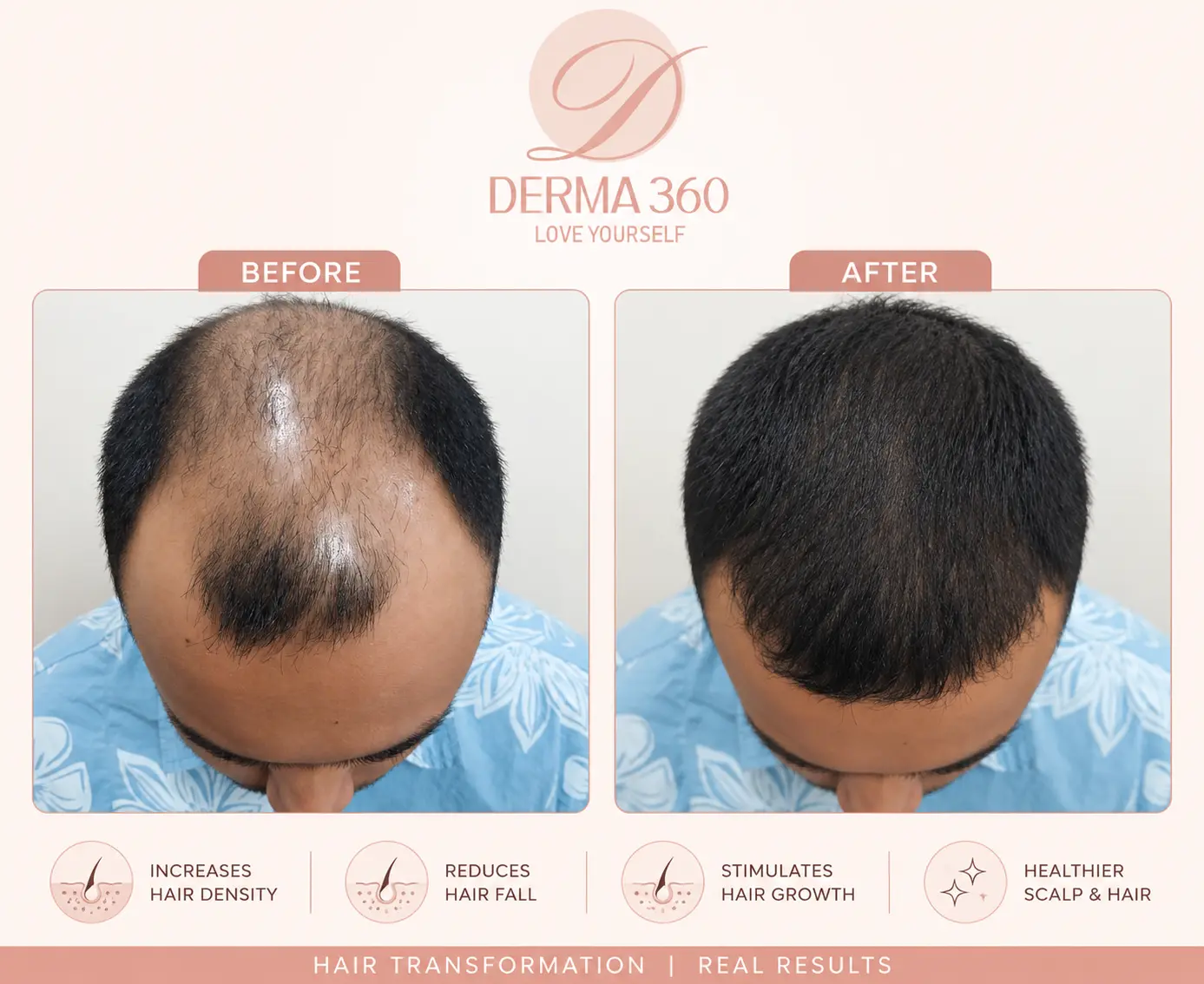
Before & after · Individual results vary
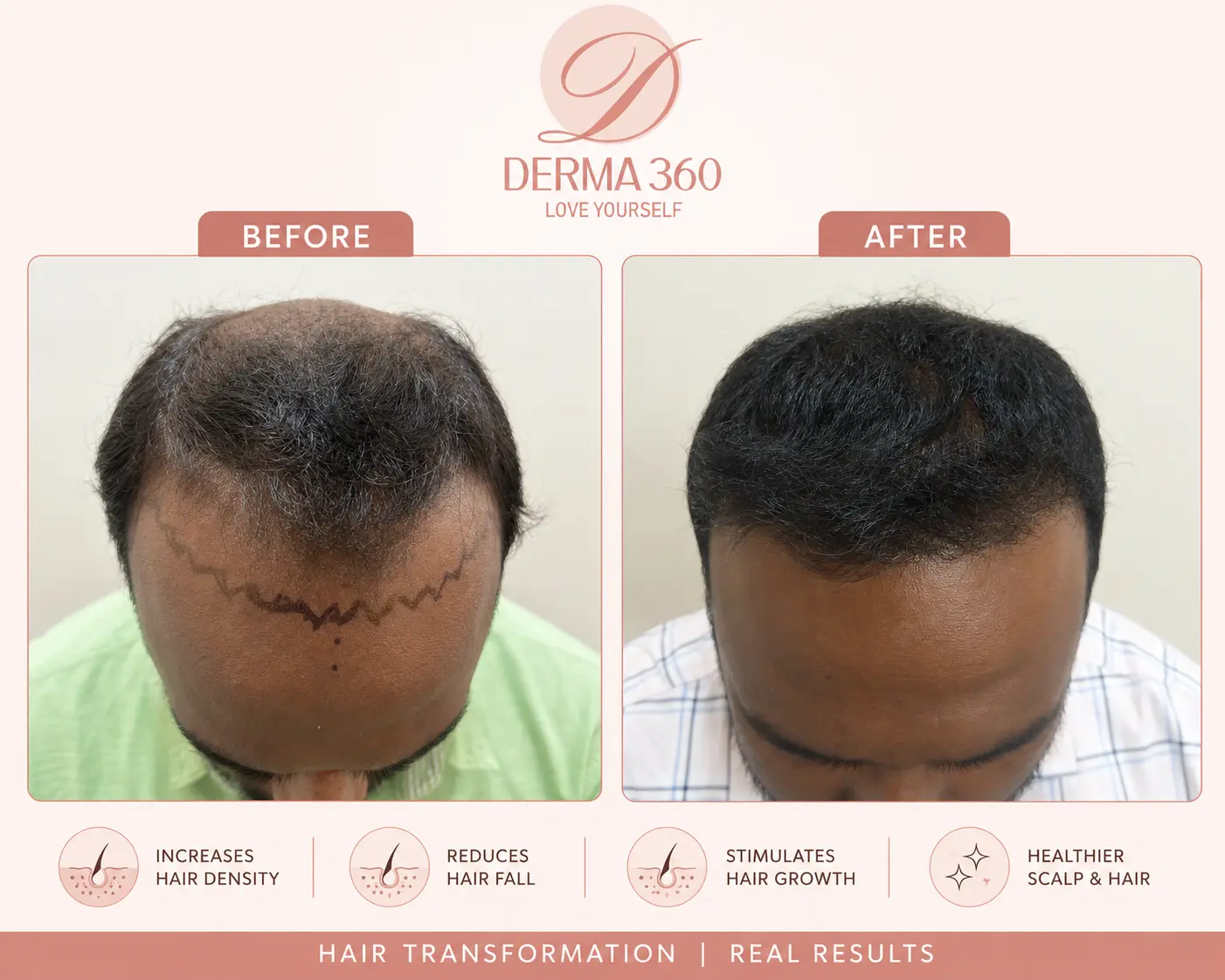
Before & after · Individual results vary
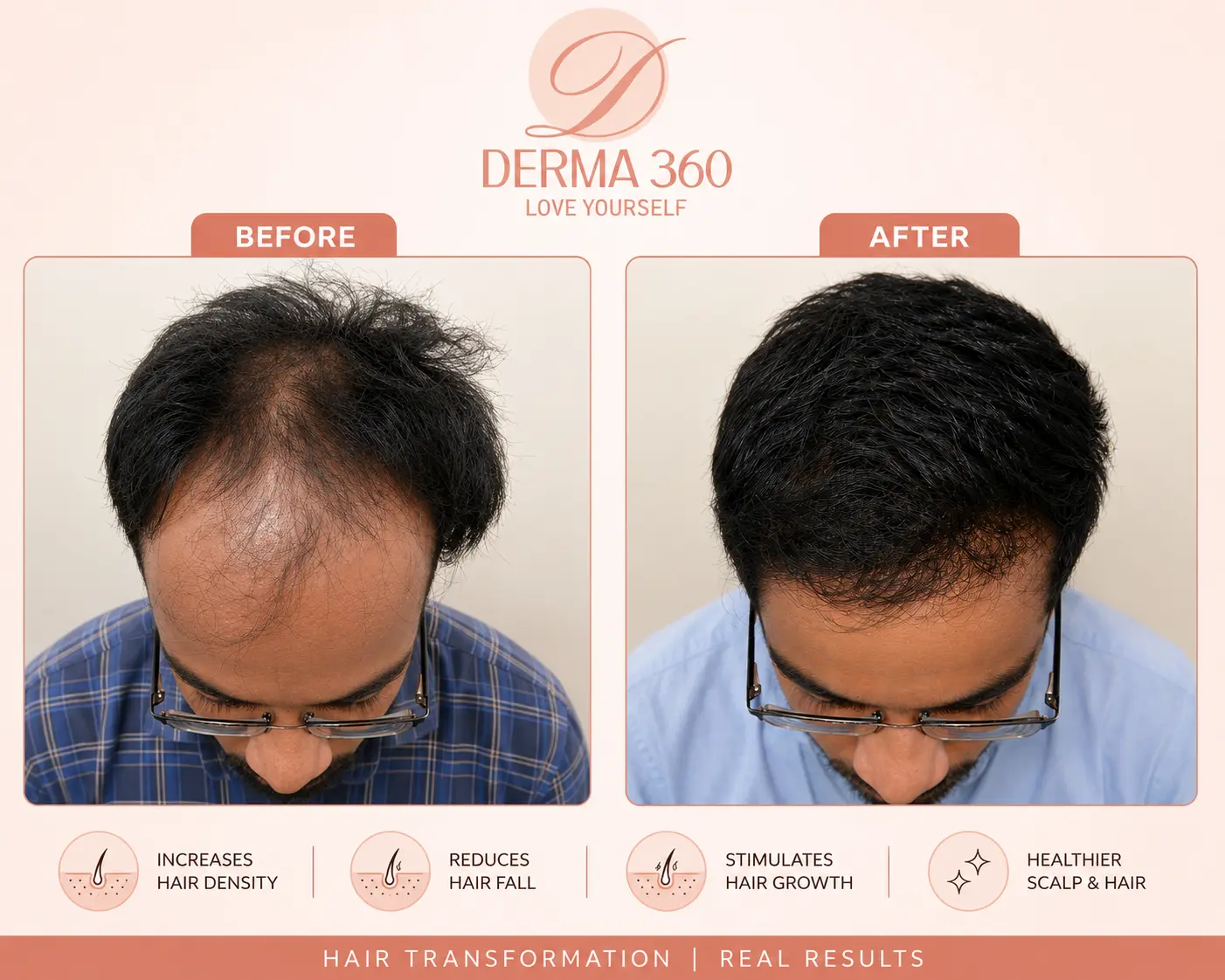
Before & after · Individual results vary
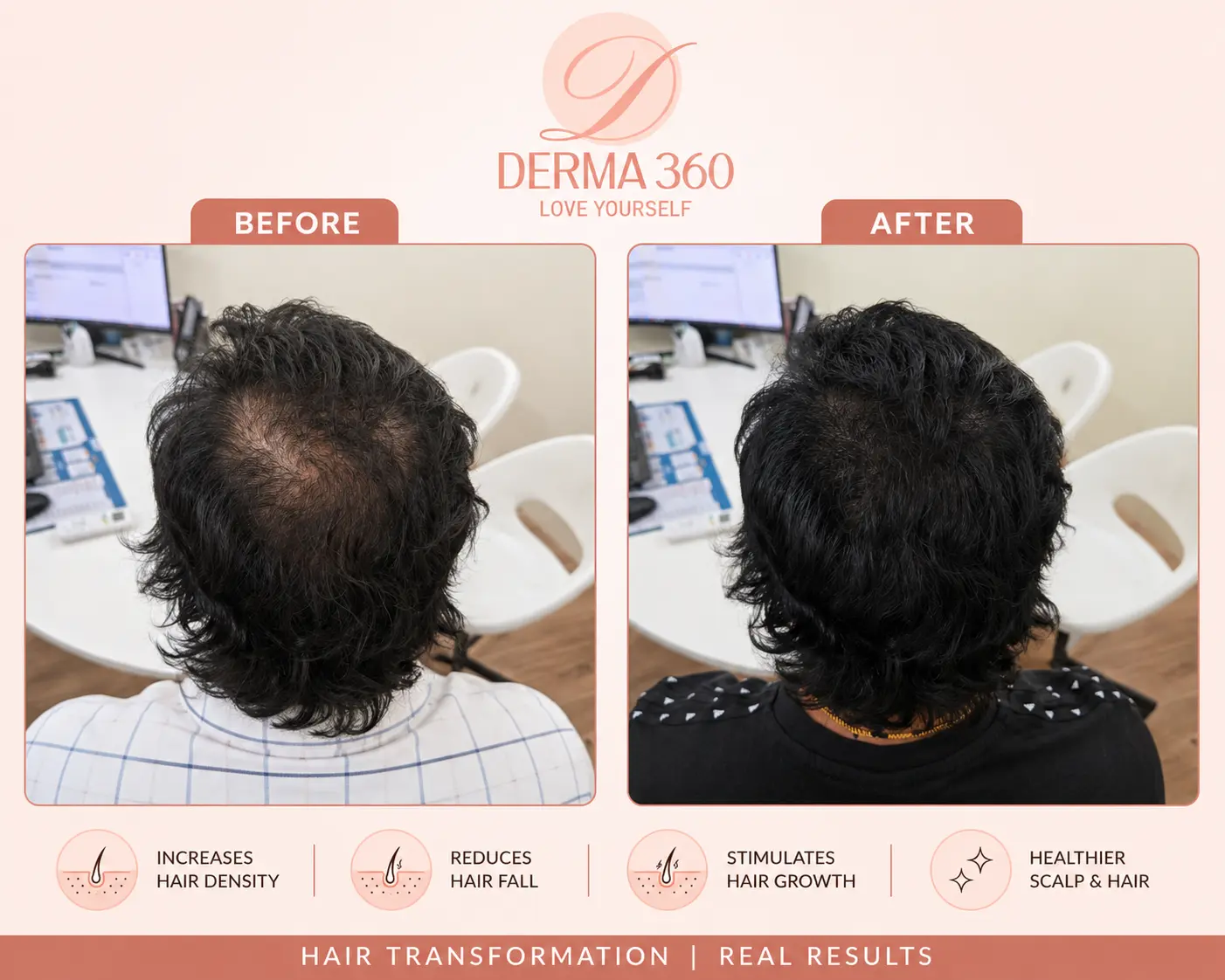
Before & after · Individual results vary
Patient journey
This video follows one patient from pre-treatment assessment through the early recovery period and visible growth over the following months. It is educational and represents one individual experience.
Results, density, healing and growth timelines vary. An individual consultation is required to discuss likely outcomes and risks.
04 · Surgeon’s explanation
Dr. Krishnanand explains this patient’s journey in a more specific way—from assessment and graft planning through the procedure, recovery and visible growth milestones.
05 · Advanced planning
We distinguish progressive pattern loss from shedding, inflammatory disease and other causes before considering surgery.
Density, calibre, scalp health and long-term donor reserve shape a safe, realistic graft plan.
Facial proportions, age, existing hair and future loss guide the position, irregularity and density transition.
Native-hair preservation, medical options and future procedures are considered as part of one plan.
06 · Your journey
Hair-loss history, scalp examination, donor analysis and medical suitability.
Hairline, recipient zones, graft estimate, technique discussion and expectation setting.
Careful donor harvesting and recipient-site placement according to the agreed surgical plan.
Written recovery guidance, early review, growth photography and long-term hair-loss planning.
07 · Suitability
Hair transplantation may be considered for suitable men and women with a stable diagnosis and adequate donor reserve. Surgery may be postponed or avoided when loss is rapidly progressing, the donor area is weak, scalp disease is active or expectations are not medically realistic.
08 · Recovery & growth
Redness, swelling, tenderness and visible graft sites can occur. The clinic’s written aftercare must be followed closely.
Transplanted hairs may shed as the follicles enter a new growth cycle. This can be a normal part of recovery.
New growth generally becomes noticeable gradually, often from around the fourth month, with individual variation.
Density, calibre and texture continue to develop. Full results may take approximately 10–18 months.
09 · Common questions
Suitability depends on the diagnosis, stability of hair loss, donor density, scalp health, medical history, age and the likely future pattern of thinning. A transplant should be planned only after an in-person assessment.
A graft estimate is made after examining the donor area and mapping the recipient area. The goal is not simply the highest number—it is a safe, strategic distribution that respects long-term donor supply.
Naturalness depends on hairline shape, direction, angle, graft selection and density distribution. These details are planned around facial proportions, existing hair and the expected progression of hair loss.
Early shedding can occur before new growth becomes noticeable. Growth develops gradually over the following months, and full maturation may take approximately 10–18 months. Timelines vary between patients.
Regenerative treatments may be considered as an adjunct for selected patients, but they do not replace diagnosis, medical management or a properly planned transplant. Suitability is assessed individually.
A transplant relocates selected follicles; it does not stop progressive loss in untreated native hair. Long-term planning may include medical treatment and follow-up when appropriate.
Hair transplantation is a surgical procedure with potential risks, including bleeding, infection, scarring, altered sensation, poor growth and an unnatural result. This page is general education, not a promise of outcome or a substitute for an individual medical consultation.
Advanced hair restoration · Madhapur
Doctor-led assessment, donor-aware planning and natural hairline design—supported by structured aftercare at our Kavuri Hills, Madhapur clinic.
Hairline-led
Donor-aware
Future-focused
Derma 360 · Madhapur